Thanks to Guy Coleman for making this all possible. I am working on a 30 foot, front tractor mount rig for green on brown detection. I will assemble 10 units for this project.
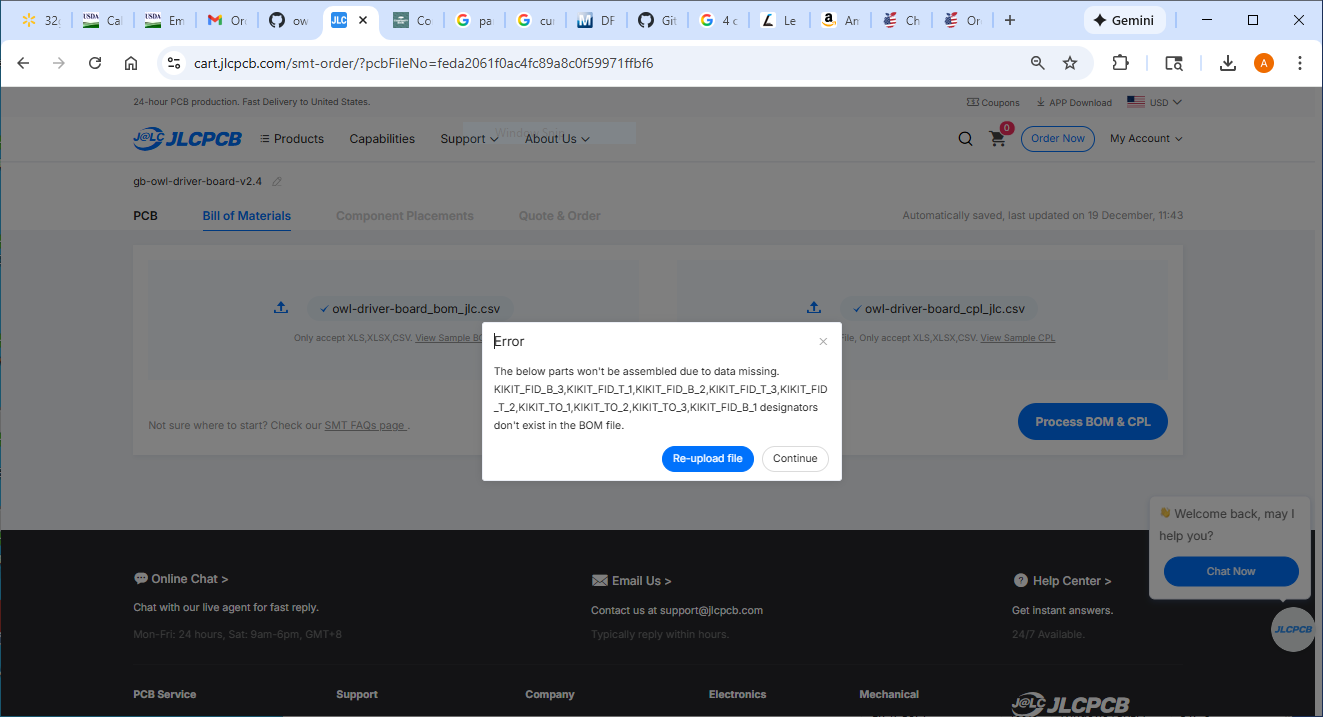
I am attempting to order the official owl pi hat through JLCPCB and am getting an error on the BOM/CPL page. Can anyone tell me what I am doing wrong?
This is a really cool project! I will put up a post sharing how we managed the power across 12 units. It’s pretty much just a bunch of car relays managing each OWL. You might have a better solution here. We also run an enable switch from the controller to each EN on the boards, giving you a hardware-based shutoff at the end of each run/wherever.
In any case, definitely share your progress - I know there are quite a few who would be interested in what you find. Happy to help at any stage here as well.
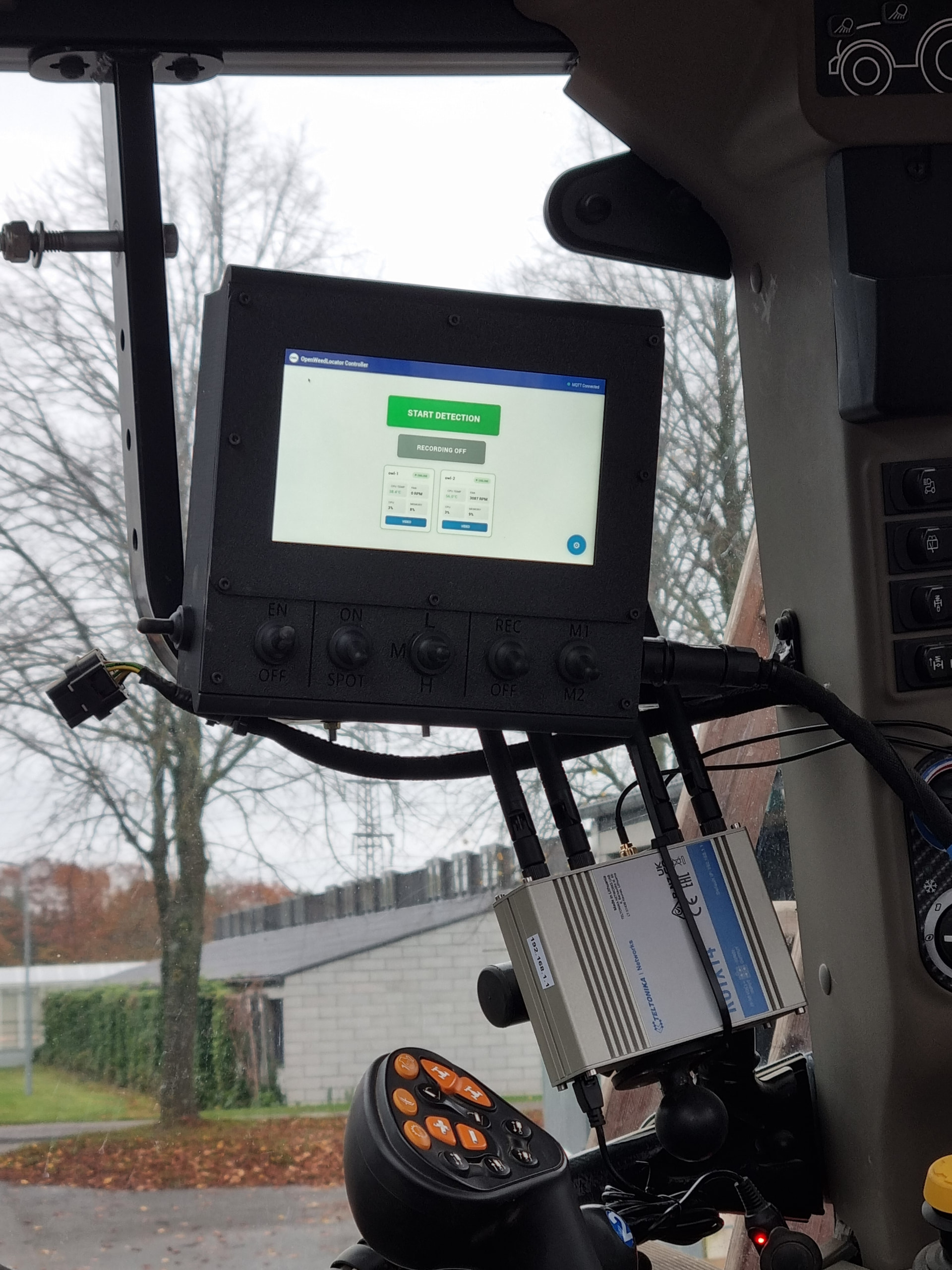
How are you considering doing the networking/control of all the OWLs from thr cab? We used a Teltonika RUTX14 industrial wifi router to cover the 12m/36ft and it worked quite well. You could also run a hardwired ethernet network up to a switch in the cab - likely more reliable but a bit more work.
All this setup is automated with the owl_setup.sh script in the wireless-display branch, or the controller_setup.sh if you’re setting up the controller itself.
As for the JLC errors @blinken would know more about it. You can also purchase the boards directly from his site, but likely more expensive than having 10 built yourself.
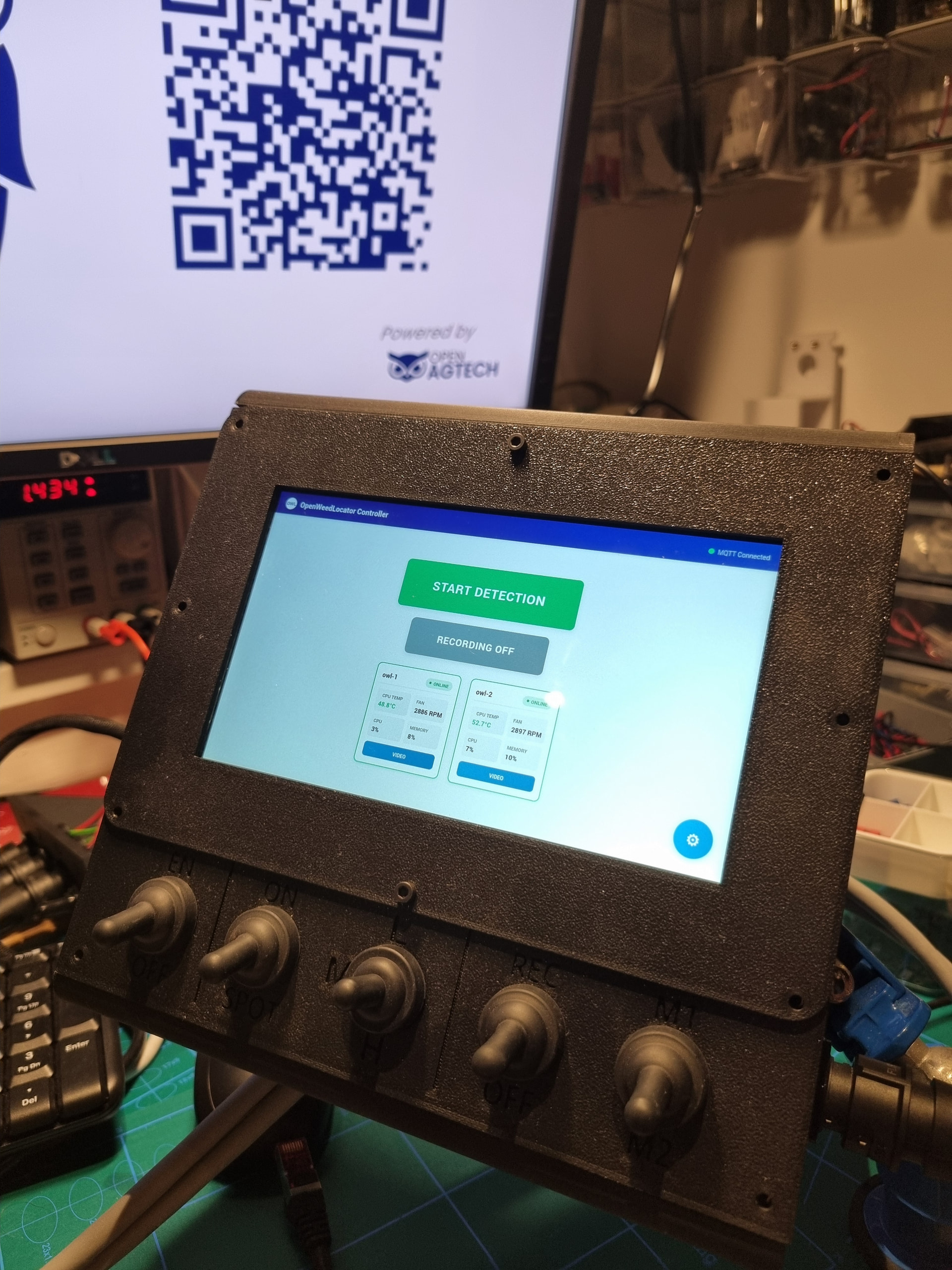
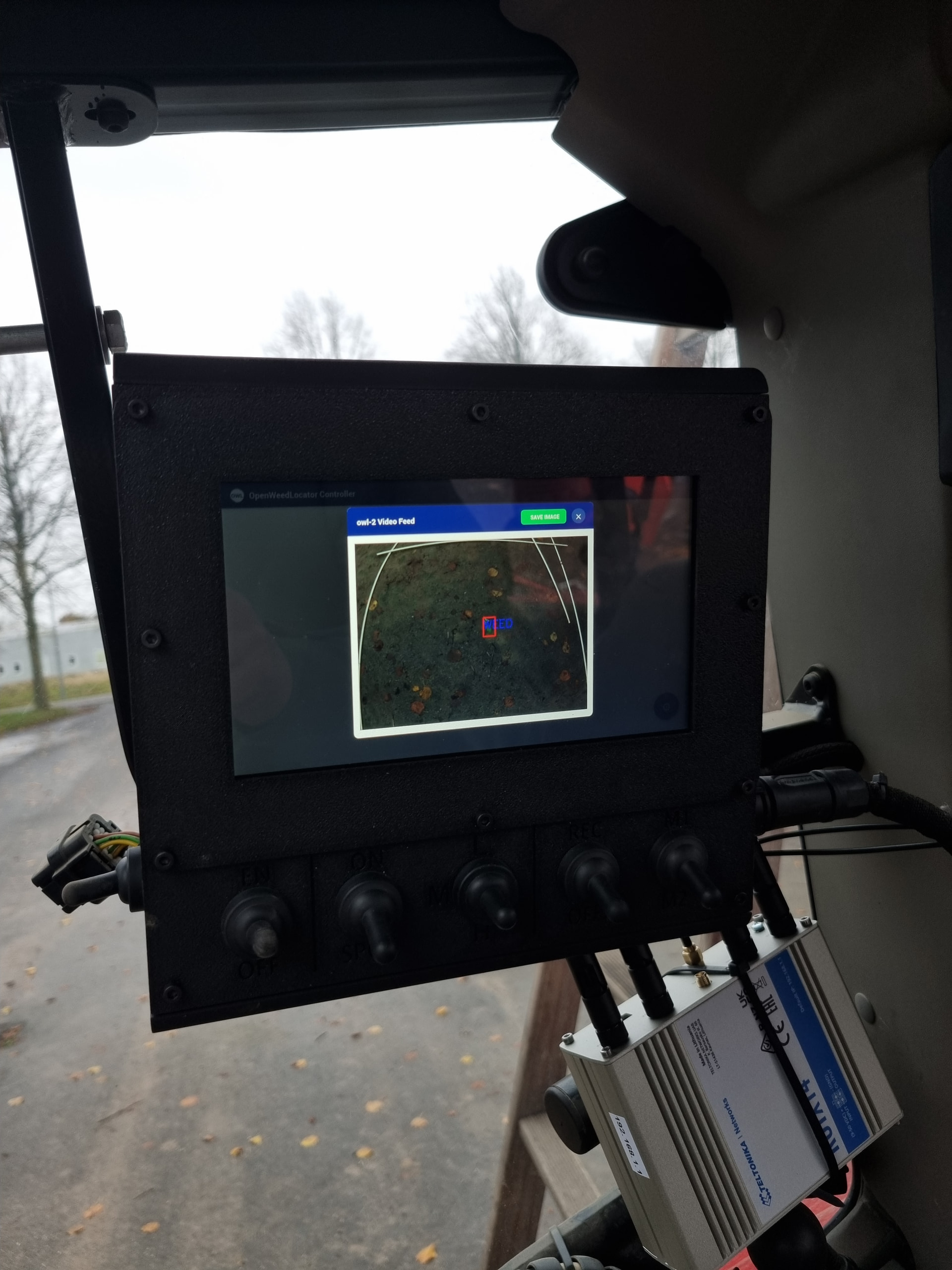
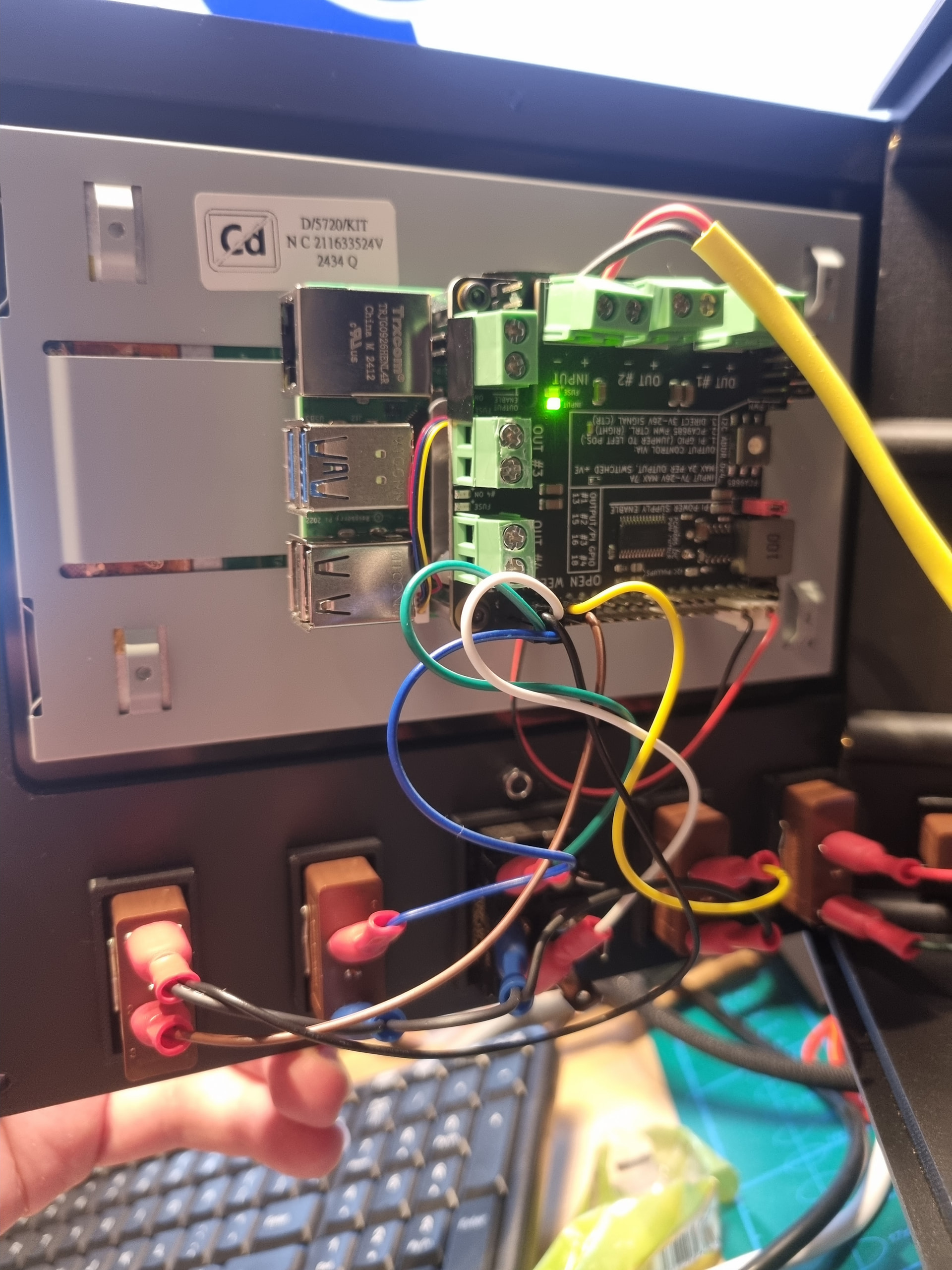
If it helps - here are some images of the current controller design. The architecture is basically:
RUTX14 router sets up a wifi network across the boom/cab
The controller Raspberry Pi runs as an MQTT broker and a separate flask app in kiosk mode
All the OWLs will automatically connect to the network on boot and start publishing/subscribing to the relevant MQTT via the broker.
The switches on the bottom, control GPIO pins on the controller PI and one controllers the EN pin to all OWLs for a hardware-based control.
The design means you can stream video and update all settings remotely, without need to run ethernet cables to every device. It is very helpful for managing larger numbers of OWLs.
To answer your original question - those warnings can be safely ignored. They are for some pick and place alignment contacts that don’t exist in the JLC library, which isn’t really too important.
So you can ignore them and proceed if you need to.
Great, thank you! I will try to proceed. I have already ordered 5 of the 10 that I will need from you guys at Paradar.com. I already have one unit built, using your custom relay hat. I really like the design.
I think I may attempt to copy this, it looks very neat and efficient. This rig will be a standalone, tractor mount as my initial use will be green on brown. We have a problem with glyphosate resistant ryegrass, but it emerges in early spring, surviving early season burn down.
If this is successful I may implement green on green use in soybeans to kill resistant pigweed and water hemp.
My current plan is to front mount, giving me ample room to move the owl unit ahead of the spray bar to possibly increase speed.
I was initially going to use a switch box PCB designed by @sk21 on Agopengps. His design uses a arduino nano, however I think the code would require some revision as it was made for integration into AOG. I was also considering this - GitHub - Xilofeon/Section-Control-for-AgOpenGPS
I was going to just wire in three section using the EN option on the R Pi and a simple switchbox and relay board, with a master switch to control all 10 units. However I like your wireless option the best and think I will pursue that. I am just now building the remaining 9 units and had not really thought about controls and wiring.
I have no professional training in the use of coding or microcontrollers. I have a basic knowledge of electrical theory and python. I have a bachlors in business and have been farming for the last 10 years. Your design is very straightforward and easy to understand. I hope that I am an example of the average farmer that can implement your design easily and on a budget. I am trying to keep total costs below $ 5,000 American.
I am also hoping to build a spray boom for spraying Bluegum regrowth. Mine will hopefully end up with 4 Owls to cover 4 rows of stumps. (approx 18 mtrs)
I like you am a humble farmer with an inquisitive mind and in my case, zero knowledge or experience in this space.
Where are you based? I am in SW WA.
Would like to bounce some ideas of you at some stage if thats ok.
Thank you, my project seemed a little overwhelming but now that i am building the OWL units it seems to make a little more sense. I just read through the thread with you and Guy discussing your project.
I too am a farmer with no formal training on microcontrollers/python/algorithms etc.
I am about 40, so I remember using MS-DOS before Windows was the OS of choice.
I am located in West MS, in the Mississippi River Delta. I farm primarily soybeans and corn, wheat on occasion.
I thought you were in the U.S., I actually read that as Southwestern Washington State. I am assuming that is actually Southwestern, West Australia?
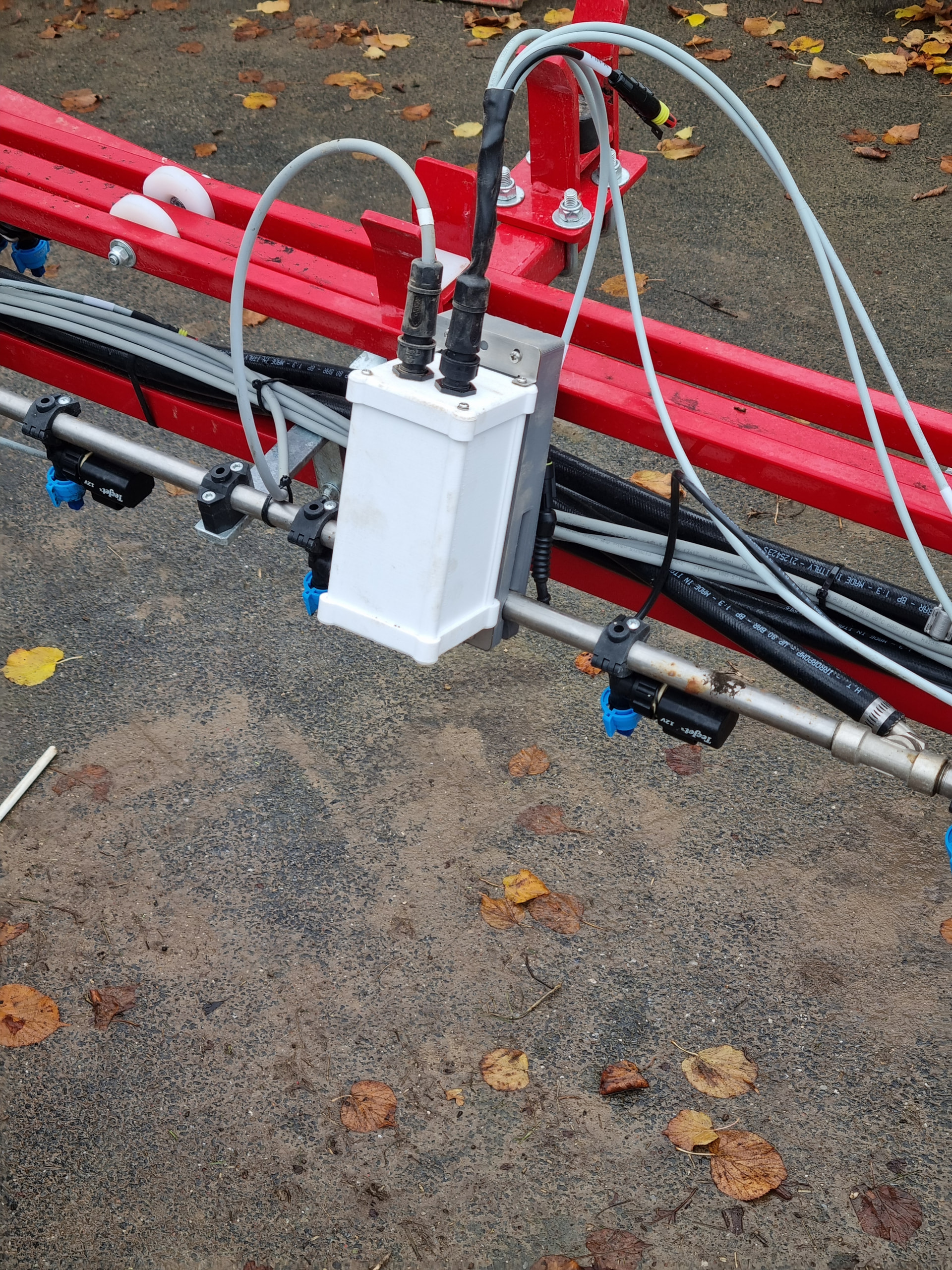
I will attach as many pictures as I can, and will be more than happy to send you any additional photos and videos. I am still smack in the middle of unit production. I will soon be constructing the wireless controller referenced above.
Will you be 3D printing or using the aluminum housing?
Had I not already purchased the R Pis I would definitely wait on the OWL 3.0. The overheating issues should be solved and the R Pi Compute is a much more compact SBC.
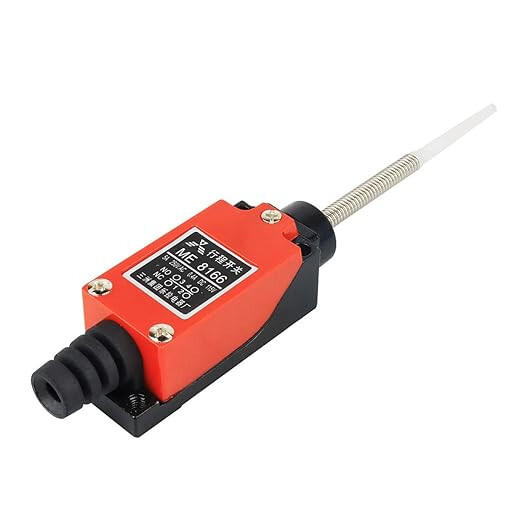
I really like this switch, it reminds me of the “whisker” switch on some sprayers, combines and cotton pickers. How close are your tree stumps when moving down the row? Could you install a fast valve in front of the boom, and shut the boom off between stumps?
I guess what I am asking is: if you are worried about the switch activating the OWL when you dont want it to, could you just shut off supply to the boom until you get close to another stump. Thus letting the solenoids open at will but nip apply any spray where you dont want it. You mentioned varying heights of growth being a problem with your switch. Im making the assumption that growth between stumps would activate your switch when you dont want it to.
For instance I will be splitting my 12 row boom into three, 4 row sections. Before I saw Guy’s controller setup, my plan for section control and quick deactivation/reativation was to simply turn off supply and run the solenoids “dry” to prevent unwanted application.